INN-Pratica:
Regional Community of Practice for Sustainable Mountain Agriculture.
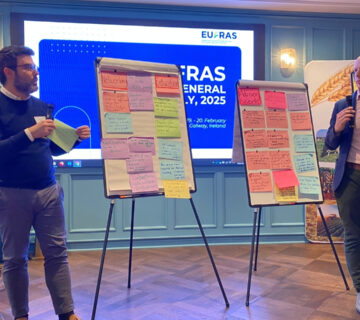
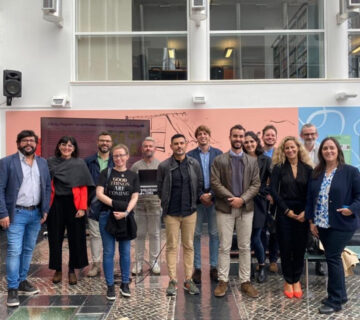
Within the framework of the INTERREG Italy–France “Marittimo” Programme, we supported Laore Sardegna in managing a structured participatory process to establish and strengthen a Community of Practice dedicated to the sustainability of agricultural production in mountain areas. The pathway created a stable space for dialogue among farm businesses, local authorities, research, schools, the hospitality sector, and other stakeholders, translating ideas and experience into guiding principles, indicators, and lines of action.


Context and need.
Sardinia’s mountain areas hold significant economic and cultural value, yet they face structural vulnerabilities (depopulation, services, connectivity, production costs, and climate risk). At the same time, they preserve natural resources, biodiversity, and traditional knowledge that can support a transition towards more resilient production models. The project responded to this context through an integrated development approach based on networks and mutual learning.
Objectives.
- Establish a stable dialogue process among diverse actors, oriented towards innovation and the ecological and digital transition.
- Share and adapt to the Sardinian context technological, organisational, and social innovations emerging within the partnership.
- Define shared guiding principles and indicators to represent the economic, environmental, and social sustainability of mountain agriculture.
- Stimulate new initiatives and collaborations among businesses, public bodies, and competence centres, in continuity with the cross-border network.
Working approach.
The pathway was designed as a progressive system of four thematic meetings, each aimed at producing operational outputs:
- a shared framing of drivers, challenges, and opportunities for mountain agriculture;
• selection and discussion of guiding principles and key indicators; - public catering as a lever for local value chains and the valorisation of mountain products;
- synthesis and translation of ideas into operational strategies and collaborative commitments.
Rurinnova's role.
Results.
- Strengthened multi-level governance for agricultural sustainability in mountain areas through a stable space for dialogue among diverse actors.
- Increased comparability and constructive debate on sustainability through shared indicators and guiding principles, supporting priorities and decision-making.
- Created enabling conditions for micro-projects and collaborations (value chains, public catering, territorial valorisation) through a network logic.
Lessons learned and replicability.
- Participatory processes work best when they deliver concrete outputs (indicators, lines of action, commitments), not only discussion.
- Quality improves with a diverse stakeholder mix (businesses, research, public bodies, schools, catering) and structured facilitation.
- A monitoring system that considers both the quantity and quality of participation makes the model adaptable and replicable in other territories.